This morning I had a two-month-old with an extra toe on his right foot. Polydactyly, as it is called, is fairly common. They say it happens every 500 births. (wouldn't it be cool if 1 in 500 people were born with tails?) If you are thinking, 'It can't be that common, I've never seen it,' it's because most parents have them removed from their babies shortly after birth. I've seen polydactyly several times in my career.
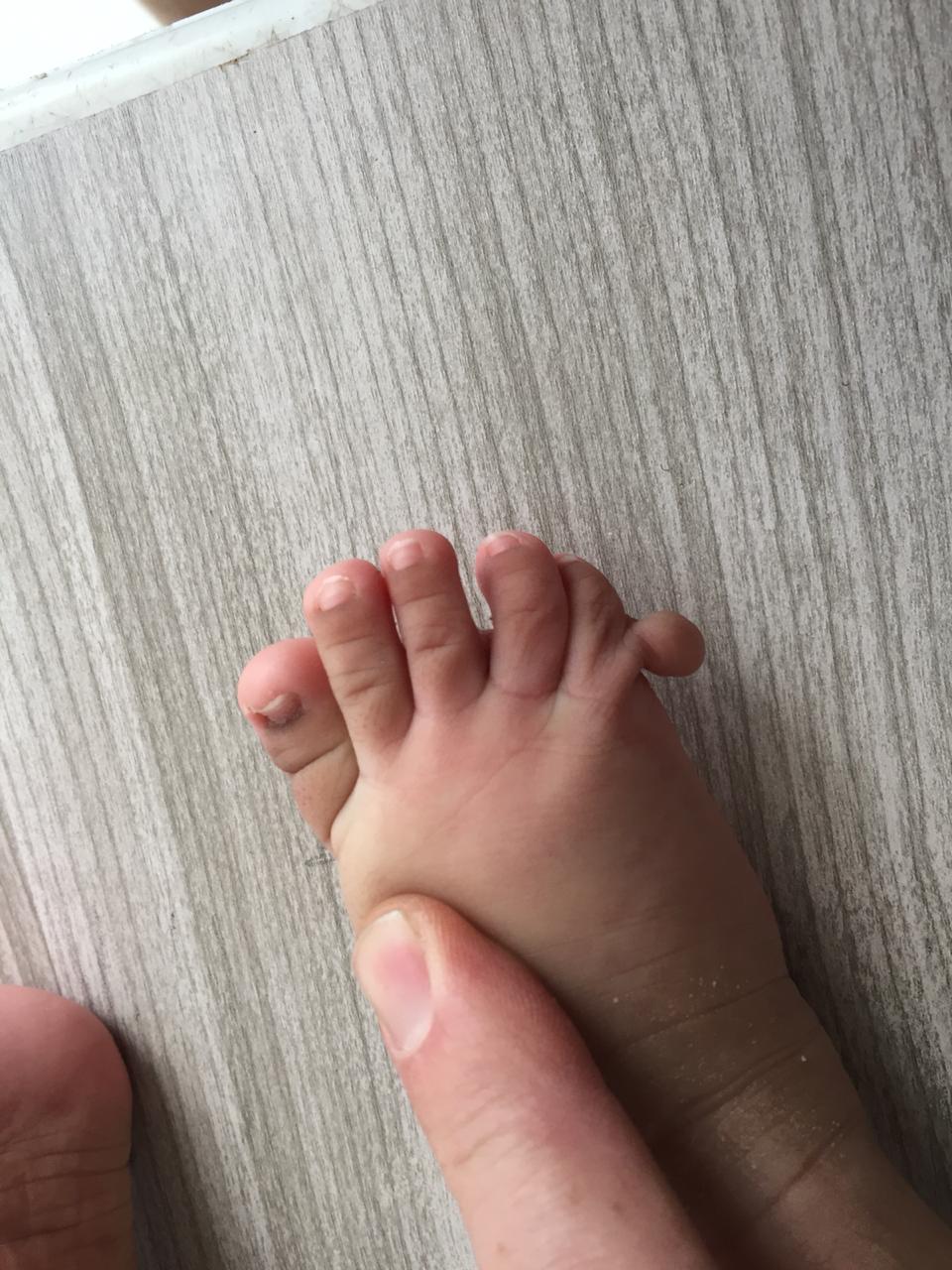
I saw this patient at our Dorcas Project a month ago and since this particular toe didn't have any bony or cartilaginous attachments (it did have a toe nail, which isn't visible in the picture), I told his mother we could easily take it off at our house where I have my minor surgery equipment. One important piece of equipment I didn't have was a papoose board. It is basically a way to restrain a baby so that one can do surgery or dental work. So 30 minutes before the patient arrived I was drilling holes and cutting slits with a jig-saw into leftovers from last year's kitchen remodeling project.

It worked great. The baby has 10 toes now and was as cool as a cucumber as I cut off his extra toe!

